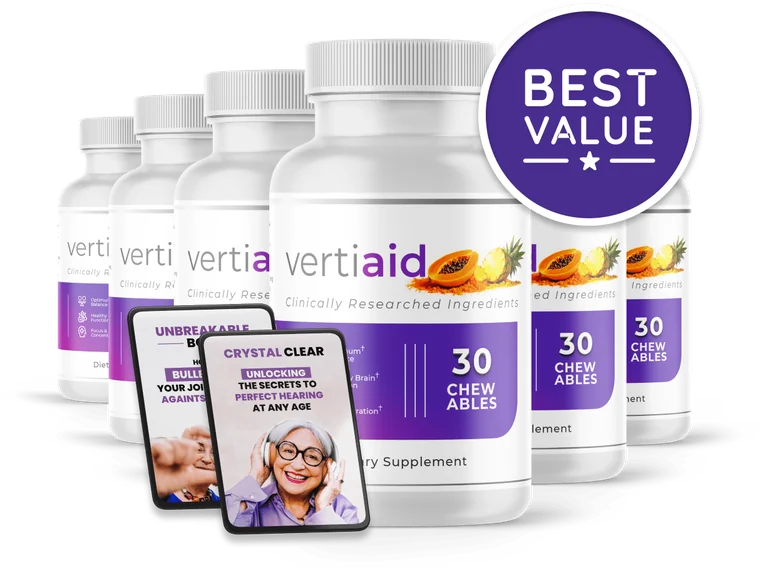
VertiAid Reviews
VertiAid customers consistently praise the disclosed-dose label and describe gradual, believable changes.
Its honest limitation: several nutrients sit at nutritional rather than therapeutic levels.
What customers consistently mention
The disclosed-dose label is repeatedly praised, especially by buyers comparing it against proprietary-blend competitors.
Patience is a recurring theme — most describe noticing changes over several weeks, consistent with how nutritional correction actually works.
Three customer accounts

“My doctor found my Vitamin D was low, so I added this alongside her plan. Two months in, I feel steadier overall.”

“Appreciated that every dose was actually listed. Made comparing it to other options so much easier.”
“Took patience — nothing dramatic in week one. By week six the fog and unsteadiness both felt a bit better.”
The honest limitations
Some doses are modest. Calcium and Potassium in particular are dosed well below levels used in some specific clinical studies.
It's not a medication replacement. VertiAid supports nutrition, it doesn't diagnose or treat the underlying cause of vertigo.
An honest overall assessment
VertiAid earns real credit for genuine dose transparency and a research-relevant Vitamin D3 dose — the strongest single piece of evidence in the formula. Its honest limitation is that several supporting nutrients sit at nutritional rather than therapeutic levels. Best understood as a well-formulated nutritional complement to your doctor's vestibular care, not a standalone solution.